
Electrical Fault Detection System (Line-Line/Line-Ground)
₨4,490.00
Delivered All over Pakistan 🇵🇰
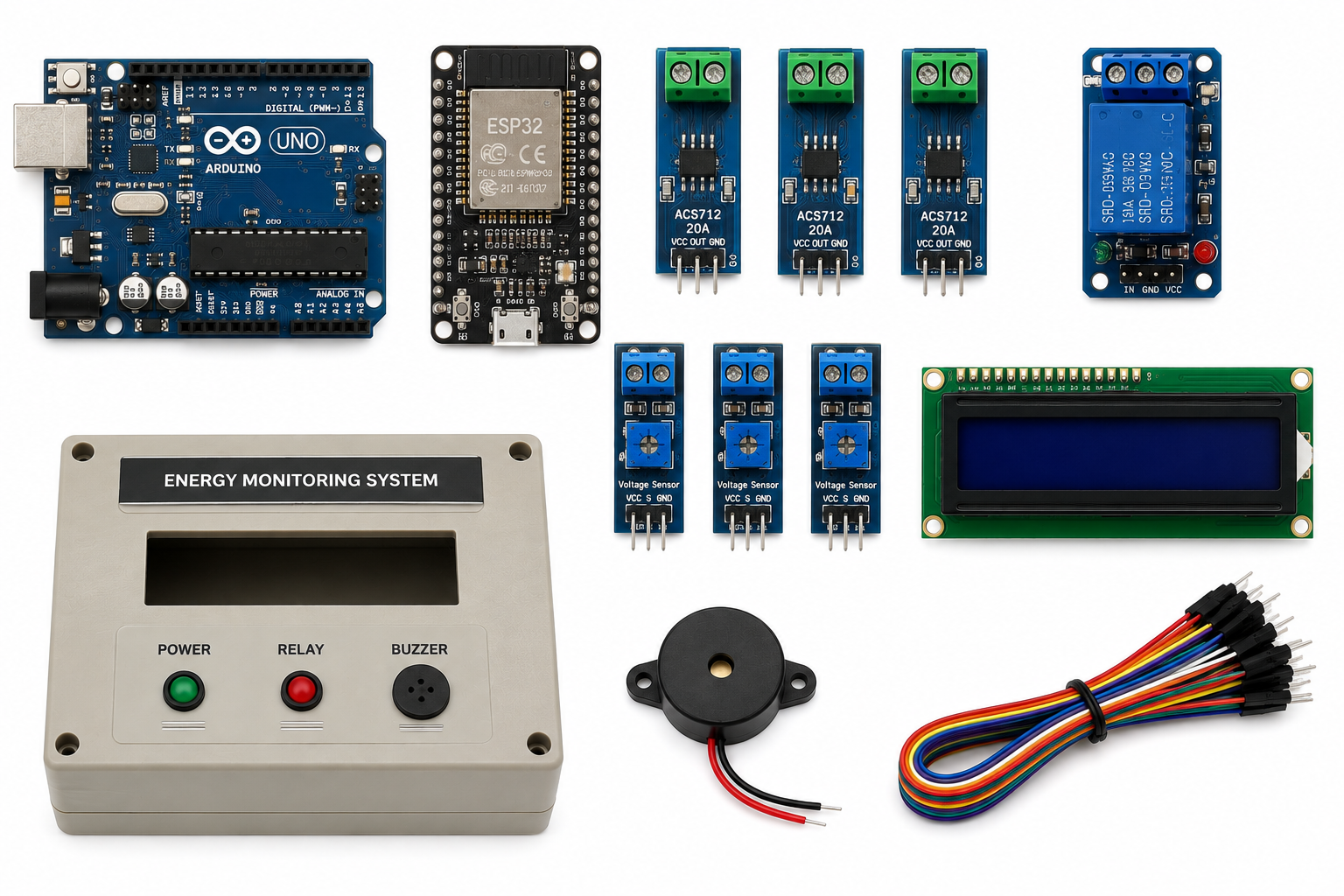
The unassembled Electrical Fault Detection System detects Line-to-Line and Line-to-Ground faults using sensors, a microcontroller, relays, and an LCD. It provides hands-on learning in electrical protection, fault monitoring, and automation.
Description
Introduction to Electrical Fault Detection System
The Electrical Fault Detection System for Overhead Transmission Lines is an educational protection and monitoring project that identifies common faults in electrical transmission systems. It detects Line-to-Line (L-L) and Line-to-Ground (L-G) faults while showing the detected condition in real time.Moreover, the system demonstrates how fault monitoring can improve understanding of electrical protection. In addition, it combines sensors, relay modules, a microcontroller, and an LCD display to monitor transmission line conditions. Furthermore, the project gives learners practical experience with fault detection, electrical protection, automation, and control systems. Therefore, it is suitable for electrical engineering labs, educational demonstrations, workshops, and final-year projects.
How the Electrical Fault Detection System Works
The system monitors the connected transmission lines and checks for abnormal electrical conditions. First, the sensors detect changes in the monitored electrical signals. Next, the microcontroller receives and processes these signals to determine the fault condition.Then, the controller identifies whether the system has detected a Line-to-Line or Line-to-Ground fault. If a fault occurs, the relay module responds according to the programmed control logic. At the same time, the LCD displays the detected fault status. As a result, users can easily observe and understand different transmission-line fault conditions.Meanwhile, the controller continues monitoring the system for changes. Additionally, users can study how sensing and relay-based protection work together in an electrical protection model. Thus, the project provides a practical platform for learning real-time fault monitoring and transmission-line protection.
Components Included:
● Arduino Uno / ESP32
● 3x ACS712 Current Sensor Module
● 3x Voltage Sensor Module
● 1-Channel Relay Module
● 16×2 LCD Display
● Piezo Buzzer
● Panel Enclosure
● Jumper Wires
Key Features & Specifications
- Fault Detection: Line-to-Line (L-L) and Line-to-Ground (L-G)
- Monitoring: Real-time transmission line monitoring
- Controller: Microcontroller-based control unit
- Protection: Relay-based protection system
- Display: LCD fault status indication
- Sensors: Electrical condition monitoring sensors
- Operation: Automatic fault identification
- Application: Overhead transmission line protection model
- Design: Compact and easy-to-use educational system
- Technology: Electrical protection, sensing, and automation
Applications & Use Cases
The Electrical Fault Detection System is suitable for electrical engineering laboratories, colleges, universities, workshops, and final-year projects. For example, students can use the project to demonstrate how different fault conditions affect transmission systems.Similarly, learners can develop practical knowledge of fault detection, relay operation, sensors, microcontrollers, LCD displays, and electrical protection. In addition, the system can support experiments involving different fault conditions and protection responses.Furthermore, the project helps users understand real-time monitoring and automated fault identification. As a result, it provides a useful learning platform for exploring power system protection, transmission-line monitoring, electrical automation, and fault analysis. Overall, the system combines sensing, programming, control, and protection concepts in one practical electrical engineering project.
Visit our website Ampflick for more products.
You can also visit our Instagram and Facebook for latest update.
Only logged in customers who have purchased this product may leave a review.
Related products

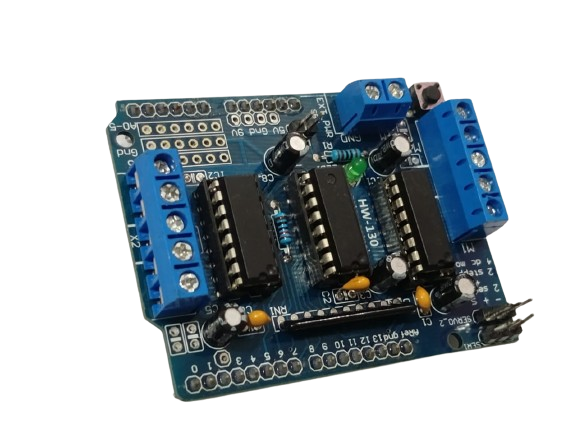
L293 D Motor Driver
- ₨480.00
- Add to cart

Castor Wheel
- ₨170.00
- Add to cart
Reviews
There are no reviews yet.